
13. "An Emma Story"
by Franco
Did you know? Emma would regale me with weird little stories about her private life when none of you Philistines were around. She would go on winding yarns about things that no one else knew. I asked her more than once to write them down in the notebooks, since they could be relevant. But she refused every time.
By the way, I didn’t do anything to extract this information from her. That’s probably what made the difference. I drove her home from uni many times since she lived close by. There’s a streetlight right before the parkway with a red light that counts down from 120 seconds. It’s torture. I prefer streetlights without countdowns. On weekdays the drive home was long enough to listen to one or two full albums, depending on their length. Emma’s favorite bands from around that time included Tindersticks and the Clientele. I would threaten to fall asleep at the wheel. When we reached a standstill in traffic she would usually start talking. I’d always listen with a grin, though I guess that comes as no surprise.
Emma dated a guy for a few weeks who worked at one of those fashionable cafés in San Blas. Anyone who’s young, good-looking, and trying to make it in showbusiness here is an idiot, and he usually moves to San Blas to work as a waiter or bartender in an expensive restaurant, where he waits to be seduced by a sufficiently-powerful executive. This particular guy lived in a crumbling tenement that I’m sure we’ve all walked past. It’s a two-story shoebox held together with plywood, and whatever slumlord owns it hasn’t bothered to do maintenance work since the eighties. Colorful rags hang from clotheslines above, and the young tenants’ bikes make a bulwark below. He lived in the second-story corner room, and was fortunate enough to have it to himself. From there he would show Emma a kitten that lived in the gap.
Between the tenement and the neighboring construction is a gap large enough to squeeze through, which they used to leave between small buildings. It’s too tight to be an alleyway; such a place usually gets filled up with trash over the years and stays like that, until something dies in there and it all has to be cleared out. Apparently this was a classic case: rotting clapboards, plastic shit, and leftover construction materials had created a natural barrier that blocked access from the street. It piled up so high that, from the ground level, you couldn’t even see through the gap and out the other end. But there was a bit of a nest or nook in the middle which was only visible from the vantage point of this guy’s bedroom window, and a stray kitten had apparently made its home there. It was a short-legged tabby. Emma wondered if it had fallen into that crater amongst the rubble, likely from the roof.
The guy would feed it, he’d bring bits and pieces home from the café and drop them down there. It allegedly drank rainwater and ate without enthusiasm. In all his time there, he said he’d never seen the kitten leave its nook. He began to wonder if it was sick and couldn’t climb out. Emma remarked that this guy seemed to relish in the animal’s predicament or at least he would muse about it with a certain indifference that disturbed her. There had been no rescue attempts; to him it was just a diversion. “Or maybe something to show to girls,” I remember suggesting.
At this point I can imagine what you’re all thinking: it’s true that I didn’t necessarily want to hear all the details of this short-lived fling, but I didn’t persist out of some perverted masochistic impulse. And she wasn’t trying to torment me, either, though I know some of you are of the opinion that she enjoyed that. I guess there’s no way to let myself off the hook here, but I will say that she told this story (and all the other ones) in a very distant manner, like something that had happened to someone else, even if it was recent.
Well, as I said this thing was short-lived, and as Emma told it she visited only two or three times, but the kitten dominated the conversation to the point where I imagine he began to regret ever showing it to her. On a certain visit Emma brought a wire hanger tied to a string and tried to fish it out. According to her it seemed uninterested in leaving and would only look up at them with its dark eyes like in one of those stories where children fall into wells or down sewer manholes. I don’t know how this guy expected others to react by introducing them to this predicament, which struck me as almost-ridiculously sad. If it were me I would’ve done something more decisive, or, if there was truly no helping it, at least I’d have the decency to keep it to myself. She had also considered jumping down there, but it was too dangerous: the structure might collapse, kill the critter, and injure her. And who knows what else could be in there? Rusty nails, syringes, etc. Emma claimed that the guy talked her out of it, but (just between us) I don’t think she would’ve ever risked it in the first place.
Thus the problem had no obvious solution and soon it put a damper on their courtship. The guy tried to steer the conversation elsewhere but it was the only thing she could think about when she saw his face, and he became a source of guilt or ill-feeling by association. The story ended there and the fate of the kitten remained a mystery.
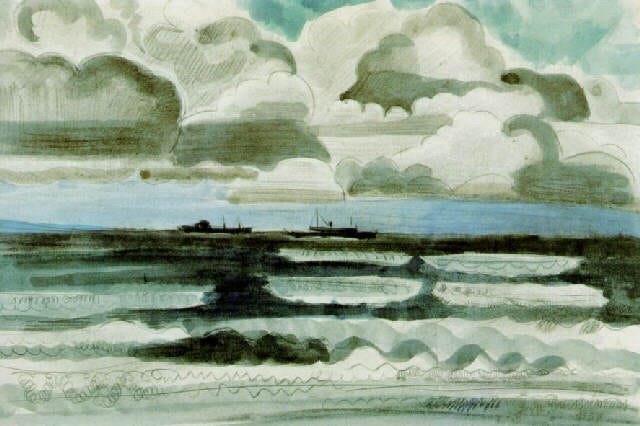
One day after Emma was gone I woke up with a sudden renewed curiosity about the whole thing, and I had nothing but time. I biked along the promenade into San Blas, through the dog park and the plaza, and came to the tenement. I don’t know anyone who lives there, so it’s not like I could just waltz in. (Though I do think I fit neatly into the “type” that rents out these rooms, and could’ve blended in among the tenants; it’s not like I’m proud of it.) I left my bike with the others and sized up the place. While the first-story windows were all boarded up or concealed by curtains and iron bars, the second-story windows were unusually tall and close to the floor, and allowed a good peek into their interiors beyond some dirty billowing curtains. I could see water-damaged ceilings and clusters of peeled paint, and old-fashioned hanging fans with warm lightbulbs at their center. There were bunk beds tightly packed against the corners, with well-worn pink towels and baby blue rags drying upon their mattresses. They exuded a dampness that made me uncomfortable, like a fantastical swamp contained in a series of four-by-four rooms, where the dripping of faulty plumbing or the defective AC would create puddles which soon grew into ponds, full of algae and moss, and eventually larger organisms would emerge. It was a humid summer day, to be fair, but a breeze was coming in from the street. I then looked for the famous gap between the buildings, and was shocked by the lack of debris. In fact it was completely unobstructed, though there were signs that this was a recent development. It was more of a surprise to discover that this little hallway-between-buildings, which couldn’t have been more than 40cm wide, aligned perfectly with the rest of the urban grid, and thus provided a direct view to the promenade and out to the sea beyond the cliffs. The effect was disorienting: to come upon a strip of luminous blue while walking between these two eyesores was like glimpsing a portal into another world. I was reminded of the free-standing gates you can find in Eastern temples, which frame the landscape in such a way that stepping through them feels like crossing a threshold.
The construction next to the tenement was possibly even older: a lean, six-story apartment tower of wind-whipped concrete, inhabited as far as I could see—but impossible to spy into, and ominous all around. It was remarkably thin for its height, and had the appearance of an evil spire. I had wondered if this building’s apartment windows might have also faced the gap from Emma’s story, but now I saw they were blocked off by a two-story brick wall, which surrounded the tower from all sides. It was clearly a recent addition. I would guess that it was built to enclose the adjacent building’s meager courtyard, and its incinerator, whose black chimney rose like the second tower of this grim little castle.
I thought about Emma and wondered if the kitten story had been her symbolic fabrication; though it was certainly plausible for this place to have been stacked with garbage until it was deemed a public hazard by the township, or maybe the neighbors had it removed to build their wall. My mind went, darkly, to the incinerator, and I thought about the kitten’s possible fates, if such a gap-dweller had even existed. It was silly to consider in earnest. Once there was a stray cat living in the trash, and eventually it (invariably) died of hunger, exposure, or disease. Emma loves to tell stories about death. The end.
But I have to admit that I was feeling a bit weepy, a bit nostalgic, and I didn’t want it to end there. The only thing left to do was to go through the gap itself. Having been cleared of all debris it was easy enough to slip between the brick and concrete, with no exposed wires or glass shards to worry about. Inside the gap you moved in the shadow of the buildings. When I was halfway across I looked up at the tenement’s second story and, sure enough, there was a single window above me. This would be roughly where the kitten was. What little I could see of this room did not surprise me. The wind came through the gap. I came out of the other end with no issues and no witnesses, only covered in some soot and dust. By some trick of perspective, this perfect alignment of gaps only exists when regarded from the other side. Standing on this end, my view of the promenade was obstructed by a power generator and some shrubs. I guess the gap is angled in such a way that the eye avoids these obstacles. But I couldn’t see the water anymore.
This one was especially intriguing… almost like lore-building! Always in love with the rich, and incredibly real descriptions.
And now I’m really sad for that kitten, I hope it found a better home but the gap haviing been cleaned may be a sad indicator.